It’s not flashy. It’s not something you see every day. But when your timing belt fails, you’ll know — and it won’t be cheap. This humble belt plays a critical role in your engine’s operation, and ignoring it can lead to catastrophic (and expensive) engine damage. In this post, we’ll break down what a timing belt does, why it matters, and how to know when it needs replacing.
What Is a Timing Belt?
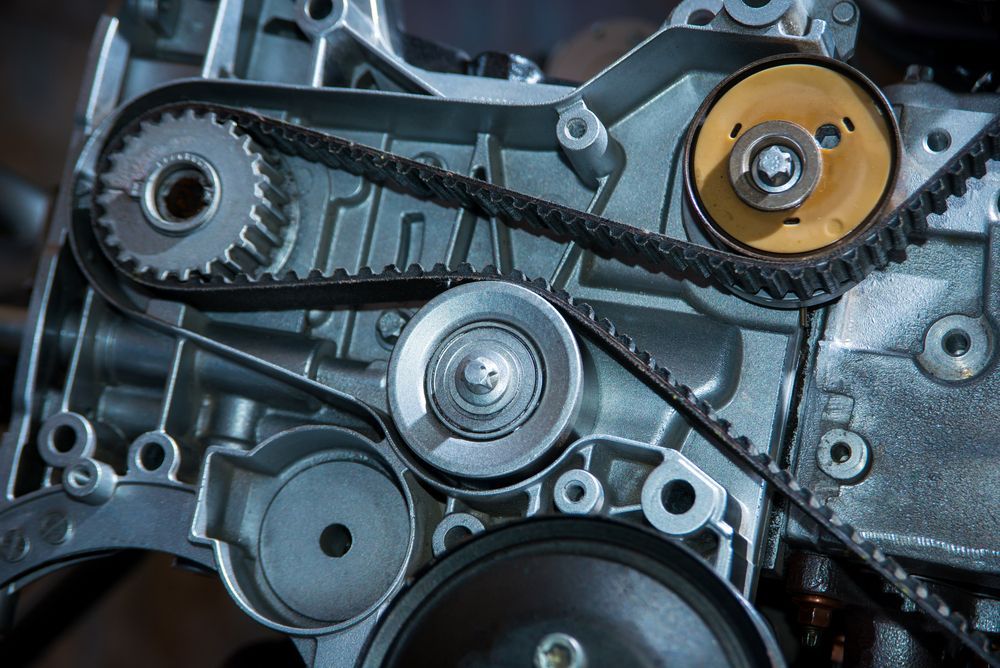
A timing belt is a reinforced rubber belt with teeth that keeps your engine’s crankshaft and camshaft(s) turning in sync. In simple terms, it ensures that your engine’s valves open and close at the right time during each cylinder's intake and exhaust strokes.
Without it, the engine wouldn’t know when to fire — and worse, the pistons and valves could collide, resulting in major internal damage. (Have you heard of the term “throwing a leg out of bed”?)
Timing Belt vs. Timing Chain: What’s the Difference?
- Timing Belt: Made of rubber, quieter, often cheaper to replace, but typically needs regular replacement (every 60,000–160,000 km depending on the type of vehicle).
- Timing Chain: Made of metal, more durable, but not immune to wear or failure. It generally lasts longer but costs more to replace when it does wear out.
Not sure which one your car has? Ask your mechanic or check your owner’s manual.
Why Timing Belts Fail
Over time, timing belts wear out due to:
- Heat and friction
- Age and mileage
- Oil leaks that weaken the rubber
- Worn tensioners or pulleys
When a timing belt breaks, it usually happens without warning, the damage can be mild (the belt only) to severe (bent valves, damaged pistons, even a full engine replacement).
Warning Signs (If Any):
Unfortunately, most timing belts don’t give obvious warning signs. But in some cases, you might notice:
- Ticking noise from the engine
- Engine misfires
- Oil leaking from the front of the motor
- Trouble starting
Still, the best way to avoid disaster is
not to wait for symptoms — just follow your replacement schedule.
When Should You Replace It?
Every car is different, but here are some general guidelines:
- Most manufacturers recommend replacing the timing belt every
100,000–160,000 km or every
5–7 years, whichever comes first.
- If you’re not sure or you’ve just bought a used car with no records, it’s worth having it checked.
Pro tip: Many timing belts are replaced along with
water pumps,
tensioners, and
seals. Since they’re all in the same area and usually wear out around the same time, doing it all at once saves time and labour costs later.
The Cost of Replacing vs. Not Replacing
- Timing belt replacement cost: Typically $500 – $1,200 depending on the car and parts needed.
- Cost of engine repair if it breaks: $2,000 – $6,000+ (or usually a new engine).
In other words, replacing the belt on schedule isn’t just maintenance — it’s
insurance against a total engine failure.
Final Thoughts:
The timing belt might be out of sight, but it should never be out of mind. It’s one of those parts where staying ahead of schedule pays off in a big way. Don’t wait for the belt to wear out and suddenly snap — talk to your mechanic, check your service records, and make sure you’re not driving on borrowed time.
Need help figuring out when your belt is due? Give us a call to book in a check over of your vehicle — we’ll check your car’s service history, kilometres and parts, and let you know if it’s time for a replacement.